
Podcast 227 — Little Known Thread Facts
(Right-Click or Ctrl-Click on the icon below and select “save link as…” to download the podcast to your computer)  Running time: 00:53:47 Size: 25.8 MB
This is a podcast of little snippets of information about the thread we use — and why not to use certain threads.
Here are the threads in the order that I talk about them, and a few interesting factoids:
Mettler – changing cone colors to lavender — 250 colors – made in Spain, Made in Germany
Aurifil – cone colors indicate thread size — 270 colors – made in Italy
Presencia — 182 colors — made in the Giza Valley of Egypt
Superior Threads – use Masterpiece for piecing — 75 solid colors — and color cards, made in Japan
Guterman – variety of thread types — made in Mexico
Coats and Clarks/ Dual Duty – confusing variety of thread types — made in Egypt
Our thread has a “Nap” or a cuticle — you must know where the smooth direction is. IF you knot the end of the smooth side, you will have less knots when you hand stitch.
Cross wound spools:
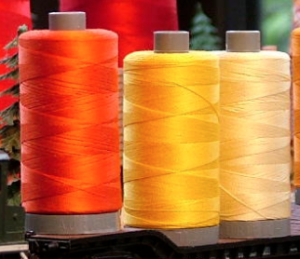
Stacked spool:
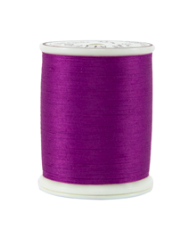
Don’t use these:
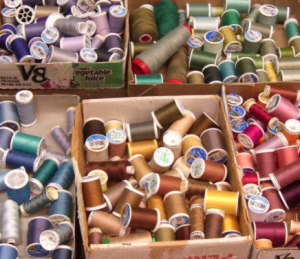
You don’t know how old they are or what the fiber content is.
Do you really want to use this thread for your lovely contemporary quilts?!
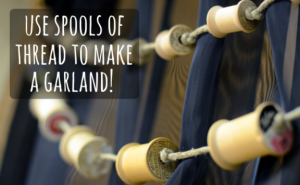
Instead, do this:
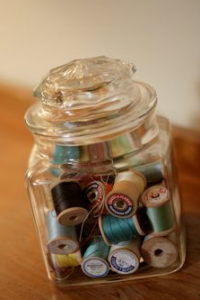
or how about this?
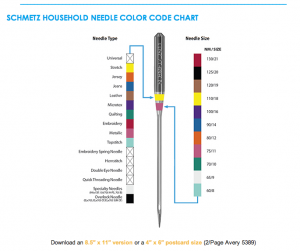
Nancy Prince’s article on BERNINA’s We All Sew Blog:
http://weallsew.com/2014/12/30/how-to-pair-thread-weight-with-needle-size/?crlt.pid=camp.0Ru9a7o
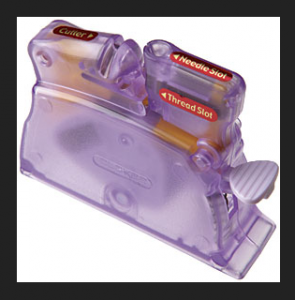
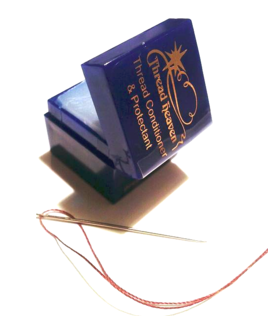
Now for two of my favorite, can’t-live-without notions:
The quote of the week:
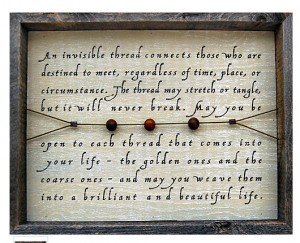
Don’t forget to leave me a comment and let me know any thread factoids that I missed, or to let me know what you want to hear about on an upcoming podcast. Just click the COMMENT button below!
©2015 Annie Smith All Rights Reserved
Hi Annie. I’m a little confused as to which end of the thread should be knotted for hand sewing. Is it the end I’ve just cut? Is there any chance you will do a You Tube about the thread nap, etc? It’s such good information and all new to me! Thanks.
Ann
Same question as Ann! And for a lefty, do I thread the end that I just cut or do I thread the end that was already cut? Thanks! So awesome to have you back Annie!
This was a really informative podcast! I liked the idea of threading your needle the same way you would thread a sewing machine – that helps me to remember which end should be knotted (something that I’ve always struggled to remember!). I would love to learn more about sewing machine needles – not only the sizes, but also the difference between universal, microtex, etc. I’m always confused about which ones are appropriate to use for piecing, machine quilting, etc.
I found this podcast so informative, thank you! I do have something to contribute in finding the size of machine needles… Take a picture of the needle with your smartphone, then enlarge it to see it much easier!
I just discovered your podcast and am listening to past recordings. I am enjoying them very much. All of the thread info is very helpful, however, one thing you mentioned is in conflict with what I learned from Bob of Superior Threads (at a lecture I attended). He said it is not necessary to use only cotton thread to sew cotton fabric. Polyester thread is fine. Here is a link to his explanation: https://www.superiorthreads.com/education/will-polyester-tear-the-fabric/
Jane — thank you so much for your comments! I love Bob from Superior Threads, and I trust what he says. So many of the quilting threads are polyester, and I do let my Quilter’s use polyester on my quilts. They sure come out beautifully quilted. Although, I have to say that when I machine quilt, I prefer to use King Tut. I just like the variegated thread – especially the lightest beige one (is that Oyster/Alabaster? Something like that)
Thanks again!!
Early on in the episode, you mention ‘silk finish’. I don’t know what that means. thanks.
Hiya Jaye.
Thanks for asking. I’m not quite sure myself, so I will ask Mettler when I got to Quilt Market in a couple weeks, and get back to you on that.
Annie
Annie, I love your podcast, so glad you’re back.
I’m probably over-thinking this, but should we be winding our bobbins twice to make sure the nap is correct?
That’s a really good question! If you think about it, it seems as though we should, — but, actually, our bobbins wind the thread exactly the way they should.
Thanks for asking — it’s a great question!!
Annie